
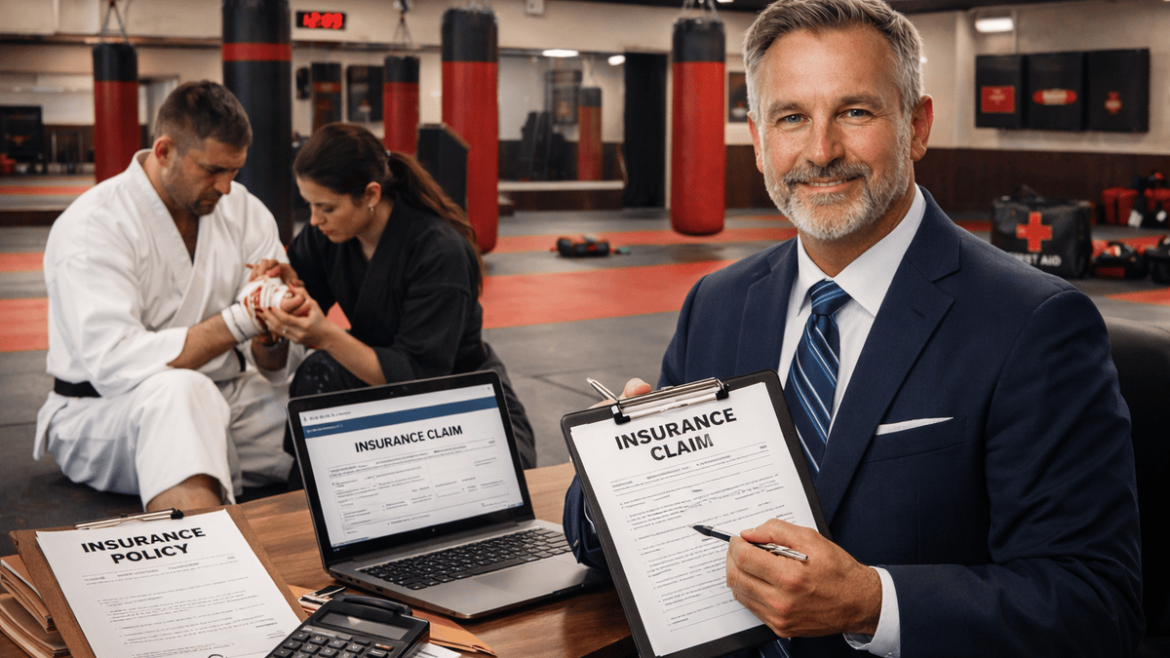
Key Takeaways
- Martial arts insurance claims typically involve bodily injury incidents, property damage, and liability lawsuits from training activities
- Most common claims include student injuries during sparring, equipment-related accidents, and slip-and-fall incidents on dojo premises
- Proper documentation and immediate reporting within 24-48 hours significantly improves claim approval rates
- General liability claims average $15,000-$50,000, while serious injury claims can exceed $100,000 in settlements
- Implementing safety protocols and maintaining detailed incident reports can reduce claim frequency by up to 40%
When a student suffers a serious injury during Brazilian jiu jitsu training at your martial arts studio, knowing how to properly handle the insurance claim can mean the difference between a manageable incident and a business-threatening lawsuit. The financial and emotional burden of martial arts insurance claims affects thousands of martial arts instructors and school owners each year, with settlements ranging from minor medical bills to six-figure liability payouts.
Understanding the claims process isn’t just about protecting your martial arts business—it’s about ensuring your students receive proper care while safeguarding your livelihood. Whether you operate a traditional karate school teaching various martial arts styles or specialize in mixed martial arts training, the right insurance coverage and claims management approach can provide a crucial safety net when accidents inevitably occur.
This comprehensive guide will walk you through every aspect of martial arts insurance claims, from the initial incident response to final settlement negotiations. You’ll learn how to document incidents properly, work effectively with insurance adjusters, and implement prevention strategies that can dramatically reduce your claim frequency and associated legal costs.
Understanding Martial Arts Insurance Claims
Martial arts insurance claims are formal requests for compensation under your insurance policy when covered incidents occur at your martial arts school or during training activities. These claims arise from the inherent risks of martial arts practice, where physical contact, high-energy movements, and specialized equipment create multiple opportunities for bodily injury and property damage.
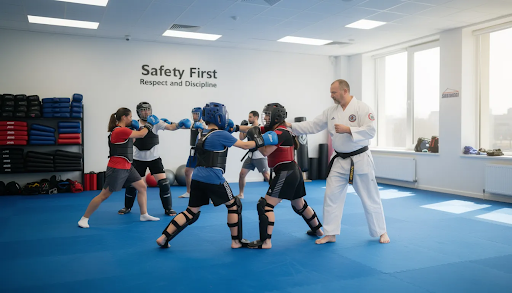
The claims process typically unfolds in three distinct phases: immediate incident response, formal claim filing with your insurance company, and investigation leading to settlement or denial. Understanding this timeline helps martial arts instructors and school owners navigate what can be a complex and stressful experience.
First-party claims involve direct benefits to injured participants, such as medical payments coverage that reimburses medical expenses regardless of fault. These claims are common in martial arts activities where minor injuries during sparring or weapons training require immediate medical attention. Third-party claims, however, involve liability coverage when someone alleges negligence or seeks compensation for injuries caused by your martial arts school’s operations.
Most insurance providers require notification within 24-48 hours of an incident, though the complete claims process typically takes 30-90 days depending on complexity. Simple medical payment claims for routine martial arts accidents may resolve within weeks, while complex liability claims involving serious injuries or negligence allegations can extend for months or even years.
Insurance adjusters play a crucial role in investigating martial arts-related incidents, reviewing medical records, interviewing witnesses, and assessing liability. Their findings directly impact settlement amounts and coverage decisions, making cooperation and thorough documentation essential for favorable outcomes.
Most Common Types of Martial Arts Insurance Claims
Student Injury Claims
Student injuries represent the vast majority of martial arts insurance claims, accounting for approximately 70% of all filed claims according to industry data. Sparring-related injuries are particularly common in contact disciplines like karate, taekwondo, and mixed martial arts, where concussions, broken bones, and joint injuries occur despite protective gear requirements.
Concussion claims have become increasingly prevalent as awareness of head injuries grows. A typical scenario involves a student struck during sparring, experiencing headaches and dizziness post-training, then seeking medical evaluation that reveals a concussion. These claims often range from $5,000 to $25,000 in medical costs, though severe cases requiring extended treatment can reach $50,000 or more.
Joint injuries from grappling arts like Brazilian jiu jitsu and judo frequently result in significant medical expenses. Torn anterior cruciate ligaments (ACL), shoulder dislocations, and elbow hyperextensions from submission techniques can require surgery and extensive rehabilitation. Average settlement amounts for these injuries range from $15,000 for minor tears requiring physical therapy to $75,000 for complete reconstructive surgeries.
Training equipment accidents represent another major category, particularly involving heavy bags, mats, and martial arts equipment. A student struck by a swinging heavy bag might suffer facial fractures requiring oral surgery, while mat-related falls can cause serious spinal injuries. Equipment-related claims typically involve both medical payments and potential professional liability if improper installation or maintenance contributed to the accident.
Overexertion injuries during intense training sessions affect both new and experienced martial artists. Heart-related incidents in older participants, heat exhaustion during summer training programs, and muscle strains from inadequate warm-up procedures all generate claims. These incidents often trigger questions about instructor supervision and medical screening protocols.
Pre-existing condition aggravation claims present unique challenges for martial arts coverage. When a student with previous knee problems suffers additional damage during martial arts training, determining covered injuries versus excluded pre-existing conditions requires careful investigation. Insurance companies often require detailed medical records dating back years to establish baseline conditions and assess claim validity.
Property Damage Claims
Property damage claims in martial arts schools typically involve damage to the facility itself, equipment, or third-party property during training activities. Equipment damage from improper use represents a significant portion of these claims, particularly when students misuse heavy bags, break training weapons, or damage mats through excessive force or poor technique.
Facility damage during demonstrations or tournaments can result in substantial repair costs. High-energy techniques performed too close to walls, mirrors, or HVAC systems can cause thousands of dollars in damage. A recent case involved a martial arts demonstration where a thrown training partner crashed through a glass partition, resulting in $12,000 in repairs plus temporary facility closure costs.
Third-party property damage at off-site training locations creates additional liability exposure. When martial arts schools conduct training at rented facilities or public parks, damage to property not owned by the school can trigger general liability coverage. This includes broken windows from errant throws, damaged flooring from weapon training, or landscaping destruction during outdoor activities.
Theft and vandalism claims affect martial arts schools like any small business, but the specialized nature of martial arts equipment can create unique challenges. High-value items like professional-grade mats, training weapons, and electronic equipment require specific documentation and replacement cost coverage. Water damage and fire-related property claims can be particularly devastating for martial arts schools given the density of specialized equipment and the importance of maintaining safe training environments.
Professional Liability Claims
Professional liability claims arise when martial arts instructors face allegations of negligent instruction, improper supervision, or failure to provide adequate safety warnings. These claims often carry the highest settlement amounts and most serious reputational risks for martial arts businesses.
Negligent instruction claims typically involve allegations that instructors taught dangerous techniques without proper progression or safety measures. A common scenario involves a student claiming they were pushed to attempt advanced throws or submissions beyond their skill level, resulting in serious injury. These claims often cite specific instances where the instructor allegedly ignored safety protocols or failed to assess student readiness.
Failure to provide proper safety warnings or equipment generates substantial liability exposure, particularly in weapons training and full-contact disciplines. Courts have found martial arts schools liable when students suffered injuries using equipment without adequate instruction or when schools failed to enforce protective gear requirements during sparring sessions.
Inadequate supervision during high-risk martial arts activities represents a growing source of professional liability claims. Incidents occurring when instructors are distracted, absent from the training area, or maintaining inappropriate student-to-instructor ratios often result in successful negligence claims. Insurance companies increasingly scrutinize supervision protocols when investigating these claims.
Claims arising from instructor certification or credential disputes have become more common as martial arts commercialization increases. Students injured by unqualified instructors may seek compensation from schools that failed to verify credentials or provided inadequate oversight of assistant instructors. These claims often involve both direct liability and negligent hiring theories.
Sexual harassment or inappropriate conduct allegations represent the most serious category of professional liability claims, with potential settlements reaching hundreds of thousands of dollars. Even unfounded allegations can result in substantial defense costs and permanent reputational damage, making abuse prevention protocols essential for all martial arts schools.
The Martial Arts Insurance Claims Process
Immediate Response (First 24 Hours)
The first 24 hours after a martial arts accident largely determine the ultimate success of your insurance claim and potential liability exposure. Your immediate response must balance providing necessary medical care with protecting your legal and financial interests.
Emergency medical care takes absolute priority when serious injuries occur during martial arts training. Call emergency services immediately for head injuries, suspected fractures, or any incident involving loss of consciousness. Document the decision-making process around medical care, including who made the call and what symptoms prompted the response. This documentation protects against later claims that you delayed appropriate medical attention.

Documenting the incident thoroughly while details remain fresh significantly improves claim outcomes. Take photographs of the training area, equipment involved, and any visible injuries. Photograph the exact position where the incident occurred, showing mat conditions, nearby obstacles, and lighting. These images often become crucial evidence months later when memories fade and conditions change.
Witness statements provide essential third-party verification of incident details. Collect contact information from all present students, parents, and staff members. Ask each witness to write a brief statement describing what they observed, avoiding speculation about fault or cause. Witness accounts gathered immediately after incidents carry more weight than statements collected days or weeks later.
Notifying your insurance carrier within the required timeframe—typically 24-48 hours—is crucial for coverage protection. Many martial arts insurance policies include specific notification requirements that can void coverage if not followed precisely. Contact your insurance provider even for seemingly minor incidents that might develop into larger claims later.
Preserving evidence and avoiding discussions of fault protect your legal position throughout the claims process. Instruct all staff members to avoid apologizing or accepting responsibility, as these statements can be used against you in litigation. Document conversations with injured parties and their families, noting what was said by whom and when.
Complete initial incident report forms immediately while details remain accurate. Most martial arts insurance policies require specific incident reporting procedures, and delays or incomplete information can complicate claim processing. Include objective facts about what occurred, medical response provided, and immediate aftermath of the incident.
Filing Your Claim
Filing a successful martial arts insurance claim requires assembling comprehensive documentation that tells a clear, factual story of the incident. Insurance companies evaluate claims based on the quality and completeness of supporting materials, making thorough preparation essential for favorable outcomes.
Required documentation varies by claim type but typically includes detailed incident reports, medical records, and witness statements. Professional liability claims require additional documentation showing instructor qualifications, safety protocol implementation, and student skill assessments. Property damage claims need repair estimates, replacement cost documentation, and evidence of proper maintenance procedures.
Working with insurance representatives requires a balance of cooperation and caution. Provide requested information promptly and completely, but avoid speculating about fault or making statements outside your direct knowledge. Insurance adjusters investigate claims professionally, but their primary obligation is to their employer, not your martial arts school.
Understanding coverage limits and deductibles for your specific martial arts insurance policy prevents unpleasant surprises during claim resolution. General liability coverage typically includes per-occurrence limits and aggregate annual limits, while professional liability may carry separate limits for each claim. Medical payments coverage often includes per-person limits and may require coordination with the injured party’s health insurance.
Tracking claim numbers and maintaining organized records streamlines the often lengthy claims process. Create a dedicated file for each claim including all correspondence, documentation, and updates. Insurance companies assign specific claim numbers and adjusters, and maintaining this information prevents confusion and delays.
Following up on claim status demonstrates your engagement in the process while ensuring timely resolution. Insurance companies are required to acknowledge claims within specific timeframes and provide regular updates on investigation progress. Document all communication with insurance representatives, including dates, times, and summary of discussions.
Investigation and Settlement
The insurance company investigation process for martial arts claims involves detailed review of incident circumstances, liability assessment, and damage evaluation. Understanding this process helps martial arts school owners cooperate effectively while protecting their interests.
Insurance adjusters typically begin investigations by reviewing all submitted documentation and conducting interviews with involved parties. For injury claims, they examine medical records to understand the extent of injuries and necessary treatment. Property damage investigations include on-site inspections and expert evaluations of repair or replacement costs.
Medical examinations and treatment reviews for injury claims often involve independent medical evaluations (IMEs) by physicians chosen by the insurance company. These evaluations assess the relationship between claimed injuries and the martial arts incident, treatment appropriateness, and future medical needs. IME results significantly influence settlement negotiations and coverage decisions.
Liability determination in martial arts claims involves analyzing whether the school breached its duty of care to students or visitors. Insurance companies examine safety protocols, instructor qualifications, equipment maintenance, and incident circumstances to assess negligence claims. This analysis determines coverage obligations and potential settlement amounts.
The negotiation process begins once investigation concludes and liability is assessed. For clear liability cases with documented injuries, insurance companies often seek prompt settlement to control costs and avoid litigation. Complex cases involving disputed facts or coverage issues may require extended negotiation periods and potential mediation or arbitration.
Final resolution timelines vary significantly based on claim complexity and cooperation levels. Simple medical payment claims often resolve within 30-60 days, while complex liability claims can extend for months or years. Settlement payments typically require signed releases that terminate all further claims related to the incident.
Common Reasons Martial Arts Insurance Claims Are Denied
Late reporting beyond policy-required notification periods represents the most common reason for martial arts insurance claim denials. Many policies require notification within 24-48 hours of incidents, and even seemingly minor delays can void coverage. A karate school that waited five days to report a student’s broken wrist during sparring saw their claim denied despite having valid coverage, resulting in $15,000 in out-of-pocket medical costs.
Exclusions for specific martial arts activities create coverage gaps that many school owners don’t recognize until claims arise. Mixed martial arts cage fighting, full-contact weapons tournaments, and certain extreme training methods often fall outside standard martial arts coverage. A Brazilian jiu jitsu school faced claim denial when a student was injured during an MMA competition they hosted, as their policy excluded competitive fighting events.
Inadequate documentation or conflicting incident reports frequently lead to claim denials, particularly when initial reports contradict later statements. Insurance companies rely heavily on immediate incident documentation, and inconsistencies raise questions about credibility and accuracy. A martial arts school lost a slip-and-fall claim when their initial report described dry floors, but later statements mentioned a water spill.
Pre-existing medical conditions not properly disclosed during enrollment can complicate injury claims and lead to coverage disputes. When students fail to report previous injuries or medical conditions that martial arts training might aggravate, insurance companies may deny claims arguing the injuries aren’t training-related. Thorough medical screening and documentation during enrollment helps prevent these disputes.
Claims involving alcohol or drug use by participants typically fall outside standard martial arts coverage. Even legal prescription medications that impair judgment or reaction time can void coverage when accidents occur. A aikido school faced claim denial when a student injured during evening classes tested positive for prescription anxiety medication that caused drowsiness.
Intentional acts or assault allegations between participants trigger specific exclusions in most martial arts insurance policies. When sparring escalates beyond training into personal altercations, or when students engage in deliberate harmful conduct, insurance coverage typically doesn’t apply. These situations often require separate legal defense and can result in criminal charges alongside civil liability.
Activities outside covered operations like unauthorized weapons training or competition can leave schools exposed to claim denials. A traditional karate school saw their claim denied when a student was injured during knife-defense training that wasn’t listed in their covered activities. Insurance companies interpret policy language strictly, making comprehensive activity disclosure essential during policy application.
Preventing Martial Arts Insurance Claims
Safety Protocols and Risk Management
Implementing comprehensive waiver and release agreements provides essential legal protection for martial arts schools, though these documents don’t eliminate all liability exposure. Well-drafted waivers must clearly describe martial arts activities and associated risks while using language appropriate for your jurisdiction’s legal requirements. Annual waiver updates and separate agreements for special events or high-risk activities strengthen legal protection.
Regular equipment inspection and maintenance schedules prevent many property-related claims while demonstrating reasonable care in facility management. Establish written protocols for daily mat inspections, monthly equipment safety checks, and annual facility assessments. Document all maintenance activities and repairs, as this evidence proves crucial in defending against negligence claims involving equipment failures.
Proper instructor certification and ongoing training requirements ensure qualified supervision of martial arts activities while reducing professional liability exposure. Verify instructor credentials regularly and maintain documentation of all training and certifications. Implement continuing education requirements and provide regular safety training updates to all teaching staff.
Clear safety rules and emergency response procedures must be posted prominently and enforced consistently to establish reasonable safety standards. Develop written protocols for different scenarios including medical emergencies, facility evacuations, and incident reporting procedures. Regular safety drills and staff training ensure effective implementation when emergencies occur.
Age-appropriate training programs and skill-level segregation prevent many injury claims by matching activities to participant capabilities. Establish clear progression requirements for advanced techniques and maintain detailed records of student skill assessments. Separate classes by age and experience level, particularly for contact activities and weapons training.
Documentation and Record Keeping
Maintaining detailed student enrollment and medical information provides crucial defense evidence when claims arise. Collect comprehensive medical histories during enrollment and update them annually or when students report new conditions. This documentation helps establish pre-existing conditions and demonstrates appropriate medical screening practices.
Regular incident reporting even for minor occurrences creates valuable trend data while establishing consistent documentation practices. Train all staff to complete incident reports for any unusual events, including near-misses and minor injuries that don’t require medical attention. This practice identifies potential hazards before serious accidents occur while demonstrating proactive safety management.
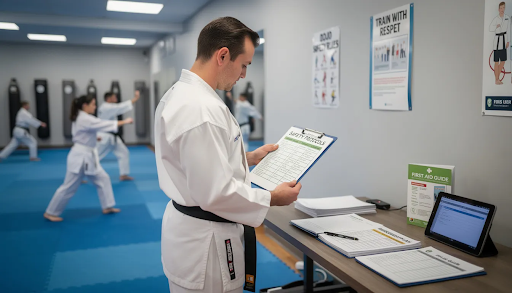
Video surveillance systems for training areas and common spaces provide objective evidence of incident circumstances while protecting against false claims. Install cameras with clear views of all training areas, entrances, and parking areas. Maintain video records according to your insurance policy requirements, typically 30-90 days for routine activities and indefinitely for incidents involving potential claims.
Instructor logs and training session documentation demonstrate proper supervision and safety protocol implementation. Require instructors to document attendance, activities performed, safety equipment used, and any incidents or concerns. These records prove valuable in defending against negligent supervision claims and establish industry-standard practices.
Equipment maintenance records and safety inspection reports provide evidence of reasonable care in facility management while identifying potential hazards before accidents occur. Document all equipment purchases, repairs, and replacements with dates and costs. Regular safety inspections by qualified professionals can identify hazards and provide expert documentation of proper maintenance practices.
Real Case Studies: Martial Arts Insurance Claims
Case Study 1: Karate Tournament Vertebrae Injury – $75,000 Settlement
During a regional karate tournament, a 16-year-old competitor suffered a compression fracture of the L3 vertebrae during a legal takedown maneuver. The injury occurred in the final minutes of a youth division match when the competitor was thrown and landed incorrectly despite proper technique execution. Initial medical evaluation at the tournament revealed severe back pain, and subsequent imaging confirmed the vertebrae fracture requiring surgical stabilization.
The insurance company initially questioned whether the tournament organizer followed proper safety protocols, particularly regarding mat thickness and medical personnel availability. However, thorough documentation showed the event met all sanctioning body requirements, with certified referees, appropriate medical staff on-site, and regulation competition mats. Video evidence confirmed the technique was executed within competition rules without excessive force.
The claim settled for $75,000 after six months of negotiation, covering immediate surgical costs, follow-up medical care, and compensation for permanent restrictions on future martial arts participation. The settlement avoided lengthy litigation while providing fair compensation for a legitimate competitive injury. Key factors supporting the settlement included comprehensive pre-event documentation, immediate medical response, and clear video evidence of the incident circumstances.
Case Study 2: Dojo Slip-and-Fall Settlement – $12,000
A parent visiting a martial arts school to observe her daughter’s class slipped on a wet floor near the bathroom area, suffering a broken wrist and hip bruise. The incident occurred during evening classes when foot traffic was heavy and the janitor had just mopped the area without posting adequate warning signs. The injured party required emergency room treatment, orthopedic surgery, and twelve weeks of physical therapy.
Investigation revealed that the facility had established floor cleaning procedures but failed to implement proper warning systems for wet areas. Security camera footage showed the parent walking normally before suddenly slipping on the freshly mopped floor. No warning signs or barriers were visible in the area where the accident occurred.
The claim settled quickly for $12,000 once liability was established, covering all medical expenses plus compensation for pain and suffering. The martial arts school immediately implemented new cleaning protocols requiring warning signs and barriers during floor maintenance. This case illustrates how seemingly minor facility management oversights can result in significant liability exposure even for non-participants.
Case Study 3: Equipment Malfunction ACL Injury – $45,000
A 24-year-old Brazilian jiu jitsu student suffered a complete ACL tear when a training mat separated during a grappling session, causing her leg to hyperextend into the gap between mats. The student required reconstructive knee surgery and extensive rehabilitation to return to normal activities. Medical experts confirmed the injury mechanism was consistent with the foot becoming trapped between separated mats during rotation.
Investigation revealed that the puzzle-style training mats hadn’t been properly maintained and had developed gaps due to normal wear and shrinkage. The school had documented some mat separation issues in previous incident reports but hadn’t taken corrective action. Expert testimony confirmed that proper mat maintenance would have prevented the gap that caused the injury.
The settlement of $45,000 covered surgical costs, rehabilitation expenses, and wage loss during recovery. The school immediately replaced all training mats with a permanent installation system and implemented weekly mat inspection protocols. This case demonstrates the importance of proactive equipment maintenance and responding to identified hazards before serious injuries occur.
Case Study 4: Professional Liability Claim Dismissed
A 35-year-old student alleged that his instructor’s negligent teaching caused a shoulder dislocation during aikido training. The student claimed the instructor failed to demonstrate proper falling techniques and pushed him to attempt throws beyond his skill level. He sought $25,000 in medical expenses plus additional damages for ongoing shoulder problems.
The claim was ultimately dismissed based on comprehensive documentation showing proper instruction protocols and the student’s acknowledgment of risks. Training records showed the student had completed appropriate progression requirements and had practiced the falling technique multiple times before the incident. Video evidence demonstrated the instructor provided proper instruction and supervision during the class.
Signed waivers and assumption of risk agreements provided additional legal protection, along with detailed incident reports completed immediately after the injury. Medical evidence showed the student had previous shoulder problems that likely contributed to the injury severity. The case was dismissed without payment after eight months of legal proceedings, though the school incurred $8,000 in defense costs.
Working with Insurance Adjusters and Legal Representation
Effective communication with insurance adjusters begins with understanding their role and responsibilities in the claims process. Adjusters work for insurance companies to investigate claims, assess liability, and determine appropriate settlements. While they should be treated professionally, remember their primary obligation is to their employer, not your martial arts school. Provide complete and accurate information while avoiding speculation about fault or liability.
Understanding your rights and obligations during claim investigations helps maintain cooperative relationships while protecting your interests. You have the right to review policy terms, understand coverage limits, and receive regular updates on claim status. However, you’re also obligated to cooperate with reasonable investigation requests and provide access to relevant documentation and witnesses.
Consider hiring legal representation for complex claims involving serious injuries, significant liability exposure, or coverage disputes. An experienced attorney can protect your rights during the investigation process and provide valuable guidance on settlement negotiations. Legal representation becomes particularly important when claims involve potential lawsuits or when insurance companies dispute coverage obligations.
Cooperating with medical examinations and expert evaluations demonstrates good faith while protecting claim validity. Insurance companies often require independent medical examinations for injury claims or expert evaluations for property damage. Encourage injured parties to attend scheduled examinations while ensuring they understand their rights during the process.
Maintaining professional relationships with adjusters and other insurance representatives facilitates smoother claim resolution and can benefit future coverage decisions. Insurance companies maintain detailed records of claim experiences with individual policyholders, and positive working relationships can influence coverage availability and pricing. Professional conduct during difficult situations demonstrates your commitment to reasonable risk management.
Documentation requirements during the investigation phase often extend beyond initial claim filing. Be prepared to provide additional records, witness statements, or expert evaluations as the investigation develops. Maintain organized files and respond promptly to reasonable requests while ensuring all provided information is accurate and complete.
Frequently Asked Questions
How long do I have to report a martial arts injury to my insurance company?
Most martial arts insurance policies require notification within 24-48 hours of an incident, though some allow up to 72 hours. Check your specific policy language for exact requirements, as late reporting can void coverage entirely. Report incidents immediately even if injuries seem minor, as conditions can worsen or complications can develop requiring additional medical treatment.
Will my insurance premiums increase after filing a claim?
Premium increases after claims depend on several factors including claim severity, your claims history, and market conditions. Small medical payment claims may not significantly impact premiums, while large liability settlements often result in increases. Multiple claims within a short period typically have greater impact than isolated incidents. Working with specialized martial arts insurance providers who understand industry risks can help minimize premium volatility.
What should I do if a student refuses medical attention after an injury?
Document the refusal thoroughly including the student’s stated reasons and any witnesses present. Have the student sign a written refusal of medical treatment form if possible, though never pressure injured parties to sign documents. Contact your insurance company to report the incident even if medical attention was refused, as symptoms may develop later requiring treatment. Continue encouraging appropriate medical evaluation while respecting the student’s autonomy.
Are claims for pre-existing conditions covered under martial arts insurance?
Coverage for pre-existing conditions varies by policy and circumstances. Most policies exclude pre-existing conditions but may cover new injuries that aggravate previous conditions during covered activities. Thorough medical screening during enrollment and detailed documentation of student health status help establish coverage when claims arise. Consult your insurance provider about specific coverage terms for pre-existing medical conditions.
How can I dispute a denied insurance claim for my martial arts school?
Begin by carefully reviewing the denial letter and your policy terms to understand the insurance company’s reasoning. Gather additional documentation that might support your claim and consider consulting with an attorney experienced in insurance disputes. Most policies include formal appeal procedures that must be followed within specific timeframes. If internal appeals fail, external options may include mediation, arbitration, or litigation depending on your policy terms and state regulations.