
Key Takeaways
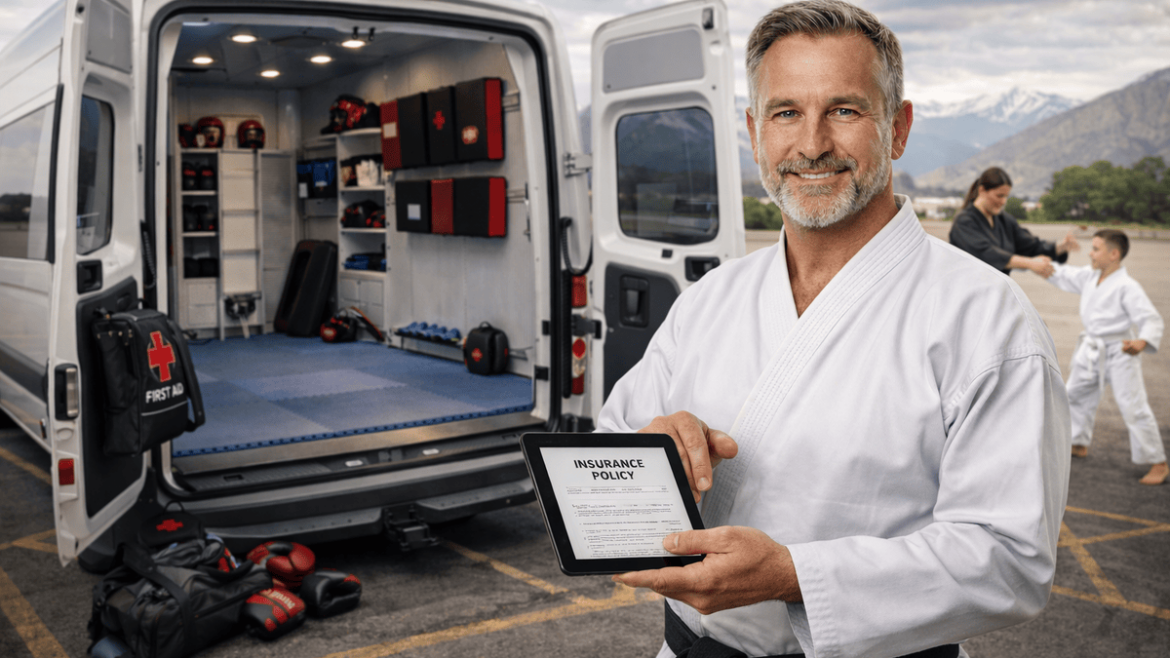
- Mobile martial arts insurance costs $200-800 annually and provides liability coverage for instructors teaching at multiple locations including parks, community centers, and private homes
- Essential coverage includes $1-2 million general liability, professional liability protection, and equipment coverage for instructors who frequently change teaching venues
- Mobile instructors face 40% higher liability risks due to varied teaching environments, inconsistent safety standards, and unpredictable venue conditions
- Flexible payment options allow hourly, daily, or monthly coverage scheduling up to 6 months in advance with one-hour cancellation notice
- Adding venue owners as additional insured parties enhances protection at no extra cost and meets most facility requirements for mobile martial arts instruction
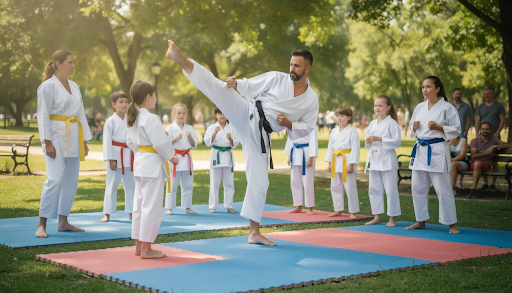
Over 3.6 million Americans practice martial arts, with a growing number seeking instruction outside traditional studio settings. Teaching martial arts in parks, community centers, and private homes offers flexibility and convenience, but it also introduces unique liability risks that standard martial arts school insurance may not adequately cover. Mobile martial arts instructors face 40% higher liability exposure compared to their studio-based counterparts due to variable teaching environments and unpredictable venue conditions.
Mobile martial arts insurance provides specialized coverage designed specifically for instructors who bring their expertise directly to students across multiple locations. Unlike traditional martial arts studio policies that focus on fixed facilities, this specialized insurance coverage adapts to the dynamic nature of mobile instruction, protecting both instructors and their students wherever training takes place.
What is Mobile Martial Arts Insurance
Mobile martial arts insurance represents specialized coverage for instructors teaching karate, taekwondo, Brazilian jiu-jitsu, mixed martial arts, and other martial arts disciplines across multiple venues. This comprehensive insurance solution addresses the unique challenges faced by martial arts instructors who operate outside traditional martial arts schools, providing financial protection for instruction delivered in parks, community centers, schools, corporate offices, and private residences.
The fundamental difference between mobile martial arts insurance and studio-based coverage lies in environmental control and risk exposure. Traditional martial arts business insurance assumes instruction occurs within a controlled, permanent facility where safety standards remain consistent. Mobile instruction, however, requires insurance coverage that adapts to varied surfaces, lighting conditions, space limitations, and potential hazards that change with each teaching location.
The growing demand for mobile martial arts instruction reflects broader fitness trends toward convenience and personalized service. Mobile martial arts instructors serve clients who prefer training in familiar environments, those with scheduling constraints that prevent studio attendance, and communities lacking access to established martial arts schools. This expanding market includes after-school programs, corporate wellness initiatives, private lessons, and specialized training for law enforcement and military personnel.
High-contact disciplines like Muay Thai and Brazilian jiu-jitsu present elevated risks in unfamiliar environments where protective equipment may be limited and surface conditions vary significantly. Mobile martial arts insurance recognizes these heightened exposures and provides appropriate liability coverage for full-contact training conducted outside purpose-built facilities.
Essential Coverage Types for Mobile Martial Arts Instructors
General Liability Insurance
General liability insurance forms the foundation of mobile martial arts insurance coverage, providing $1-2 million protection per occurrence for bodily injury claims arising during mobile martial arts classes. This essential coverage protects instructors against third-party claims when students sustain injuries during training sessions, whether from strikes, throws, joint locks, or accidental contact inherent to martial arts practice.
Property damage coverage within general liability insurance protects against damage to rented venues, including broken mirrors, scuffed floors, damaged walls, or equipment mishaps that occur during mobile martial arts instruction. Community centers, schools, and corporate facilities often require substantial property damage coverage as a condition of facility use, making adequate limits crucial for maintaining venue relationships.
Medical expense coverage provides immediate financial assistance for student injuries requiring prompt medical attention, regardless of fault determination. This coverage typically ranges from $5,000 to $25,000 per incident and can prevent minor injuries from escalating into major liability claims by ensuring prompt treatment. For mobile martial arts instructors, medical expense coverage proves particularly valuable when teaching in locations far from medical facilities or during evening classes when urgent care options may be limited.
Slip-and-fall accident protection becomes especially critical for mobile instructors who cannot control venue maintenance standards. Unlike martial arts schools with dedicated staff maintaining consistent floor conditions, mobile instructors must adapt to gymnasiums with worn surfaces, outdoor areas with uneven terrain, and multipurpose rooms that may have recently been mopped or waxed.
Professional Liability Protection
Professional liability protection shields martial arts instructors against negligence claims related to improper instruction, inadequate supervision, or poor instruction decisions made in mobile teaching environments. This coverage becomes essential when allegations arise regarding advancement of students too quickly, failure to teach proper safety techniques, or insufficient oversight during partner drills and sparring sessions.
Defense costs for professional liability claims average $15,000-50,000, making this coverage financially crucial even when allegations prove unfounded. Mobile martial arts instructors face particular vulnerability to professional liability claims due to reduced ability to maintain optimal supervision ratios in unfamiliar venues and the challenge of adapting complex techniques to varied space constraints.
Protection for reputation and credentials proves vital for martial arts instructors whose livelihood depends on community trust and professional standing. Professional liability coverage includes defense against allegations that could damage an instructor’s ability to secure future venue contracts or maintain existing client relationships, particularly important for mobile instructors who rely on word-of-mouth referrals.
Coverage extends to claims arising from weapons training, sparring instruction, and self-defense programs where the risk of student injury increases significantly. Mobile instructors teaching these specialized aspects of martial arts disciplines face heightened exposure when conducting weapons training in spaces not designed for such activities or when teaching self-defense techniques in environments where spatial limitations affect technique modification.
Equipment and Personal Property Coverage
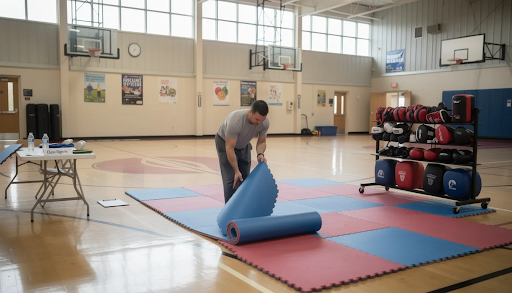
Equipment and personal property coverage protects the substantial investment mobile martial arts instructors make in portable mats, protective gear, training weapons, and specialized equipment essential for delivering quality instruction across multiple venues. Coverage typically extends up to $10,000 for theft or damage to business personal property, with options for higher limits based on equipment value.
Transit coverage becomes particularly important for mobile instructors who transport valuable equipment between teaching locations daily. Unlike martial arts schools where equipment remains securely stored, mobile instructors face constant exposure to theft from vehicles, damage during loading and unloading, and loss during outdoor classes where equipment may be scattered across large areas.
Weather-related protection covers damage to equipment exposed during outdoor martial arts classes, including mats damaged by unexpected rain, electronic equipment affected by humidity, and training weapons warped by temperature extremes. This coverage proves essential for instructors who regularly teach in parks, beaches, and other outdoor venues where weather protection may be limited.
Replacement cost coverage ensures instructors can quickly replace essential equipment without significant out-of-pocket expense, maintaining instruction continuity when equipment is stolen or damaged. For mobile martial arts instructors, even brief equipment replacement delays can result in cancelled classes and lost income, making prompt replacement capability financially critical.
Unique Risks Faced by Mobile Martial Arts Instructors
Variable Teaching Environments
Mobile martial arts instructors confront liability risks from teaching on dramatically different surfaces, including hardwood gymnasium floors, outdoor grass fields, concrete basketball courts, and various types of gymnasium matting. Each surface presents distinct challenges for martial arts instruction, requiring technique modifications and safety considerations that increase instructor liability exposure.
Inadequate lighting in rented facilities creates significant safety hazards during martial arts instruction, particularly for techniques requiring precise timing and spatial awareness. Mobile instructors cannot control lighting quality and must adapt training programs to venue limitations while maintaining student safety, a challenge that increases potential negligence exposure.
Poor ventilation and space constraints in multipurpose facilities can force dangerous overcrowding during popular classes or require technique modifications that may compromise training quality. Mobile martial arts instructors must balance venue limitations against proper instruction standards, creating potential liability when optimal safety protocols cannot be maintained.
Unfamiliar venue hazards present constant challenges for mobile instructors, including low ceilings that prevent high kicks, proximity to walls during throwing techniques, and floor obstacles like built-in equipment that cannot be moved. These environmental factors require constant vigilance and technique adaptation that traditional martial arts studios avoid through purpose-built design.
Weather-related risks during outdoor martial arts instruction include slip hazards from moisture, heat exhaustion during summer classes, and reduced visibility during evening sessions. Mobile instructors teaching in public parks and outdoor venues must continuously assess changing conditions and modify programs accordingly, increasing decision-making liability exposure.
Increased Supervision Challenges
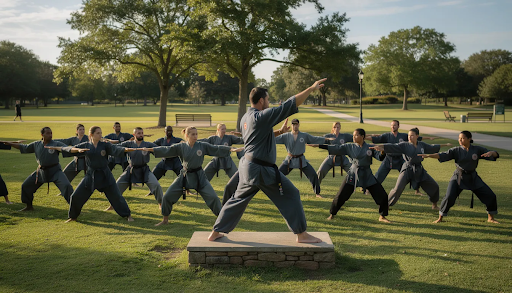
Reduced ability to maintain optimal safety oversight in temporary venues creates significant liability exposure for mobile martial arts instructors. Traditional martial arts schools benefit from controlled environments with established safety protocols, while mobile instructors must constantly adapt supervision strategies to new venues with varying layouts and potential distractions.
Student-to-student injuries during partner drills become more likely in less controlled environments where spatial limitations may force closer proximity between training pairs. Mobile instructors face increased liability when venue constraints prevent proper spacing between students practicing strikes, throws, or grappling techniques.
Inadequate crowd control during large outdoor demonstrations or community events can lead to spectator injuries or unauthorized participation by unqualified individuals. Mobile martial arts instructors must manage both enrolled students and curious bystanders in public venues where traditional security measures may not be available.
Incidents involving spectators or non-participants in public teaching spaces create complex liability scenarios where martial arts instructors may be held responsible for injuries to individuals who were not officially enrolled in classes. Public parks and community events present particular challenges where curious onlookers may attempt to participate or be struck by training equipment.
Transportation and Setup Risks
Liability during equipment setup and breakdown at each teaching location exposes mobile martial arts instructors to claims from both students and facility staff who may be injured by heavy mats, portable equipment, or training apparatus being moved into position. Unlike permanent installations, mobile equipment setup occurs under time pressure with varying levels of assistance.
Claims from injuries occurring while transporting heavy mats or training equipment create liability exposure beyond traditional martial arts instruction. Mobile instructors regularly lift, carry, and position substantial equipment loads, creating potential workers’ compensation claims or third-party injury liability during setup and breakdown procedures.
Property damage caused during venue preparation or equipment installation can result in significant financial liability when mobile instructors accidentally damage walls, floors, or fixed equipment while establishing training areas. Rushed setup schedules and unfamiliar venues increase the likelihood of costly property damage claims.
Time constraints between teaching locations can pressure mobile instructors to rush equipment setup or skip important safety checks, increasing liability exposure from inadequate preparation. Unlike martial arts schools with permanent setups, mobile instructors must complete full equipment installation and safety verification for each class session.
Cost Factors for Mobile Martial Arts Insurance
Premium Determinants
Martial arts insurance cost calculations depend heavily on the number of students taught monthly, with premiums ranging from $200 annually for instructors serving 1-50 students to $800 for those teaching 200 or more students. Insurance companies recognize that higher student volumes increase claim frequency, particularly for mobile instructors who cannot maintain the same level of environmental control as traditional martial arts schools.
Geographic coverage areas significantly impact insurance premiums, with urban locations typically adding 20-30% to base rates due to higher medical costs, increased litigation frequency, and elevated property values. Mobile martial arts instructors operating across multiple metropolitan areas face higher premiums than those serving rural or suburban communities exclusively.
Martial arts disciplines taught directly influence insurance pricing, with full-contact styles like mixed martial arts and combat-oriented training commanding substantially higher premiums than non-contact activities such as tai chi or forms-based instruction. Insurance providers assess injury frequency data for different martial arts activities when determining appropriate risk-based pricing.
Instructor experience and certification levels can significantly reduce martial arts insurance cost through experience discounts and professional recognition credits. Instructors with 10 or more years of teaching experience, advanced belt rankings, or specialized safety certifications often qualify for premium reductions of 10-25% compared to newer practitioners.
Flexible Payment Options
Hourly coverage options starting at $25 accommodate mobile martial arts instructors who conduct occasional workshops, seminars, or substitute teaching sessions. This flexibility allows part-time instructors or those just entering mobile instruction to obtain appropriate coverage without committing to annual premium payments that may exceed their teaching income.
Daily coverage rates ranging from $40-75 serve instructors conducting weekend intensives, multi-day training camps, or special event demonstrations. These short-term options prove particularly valuable for martial arts instructors who supplement studio teaching with periodic mobile instruction or seasonal outdoor programs.
Monthly plans provide optimal flexibility for most mobile martial arts instructors, with costs ranging from $35-150 depending on teaching volume and coverage limits selected. Monthly billing allows instructors to adjust coverage based on seasonal demand variations and temporary schedule changes without penalty.
Advanced scheduling capabilities allow mobile instructors to purchase coverage up to 6 months in advance while maintaining the ability to modify or cancel protection with 60 minutes notice. This flexibility accommodates the unpredictable nature of mobile martial arts instruction where weather, venue cancellations, or client schedule changes may require immediate coverage adjustments.
Cost-Saving Strategies
Bundling multiple coverage types generates substantial savings, with discounts of 15-25% available when combining general liability, professional liability, and equipment coverage under unified mobile martial arts insurance policies. These package deals provide comprehensive protection while reducing administrative complexity for busy mobile instructors.
Safety bonuses reward martial arts instructors who complete first aid training, CPR certification, or specialized risk management programs. Insurance companies recognize that properly trained instructors present lower claim risks and offer premium discounts of 5-15% for documented safety education completion.
Claims-free discounts provide ongoing premium reductions for mobile martial arts instructors who maintain clean safety records over multiple policy periods. These experience-based discounts can reduce annual insurance premiums by 10-20% for instructors who demonstrate consistent risk management practices.
Association discounts through martial arts federations, instructor organizations, or professional teaching associations can provide group purchasing power that reduces individual premium costs. Many national and regional martial arts organizations negotiate preferred rates with insurance providers specifically for their membership base.
Choosing the Right Mobile Martial Arts Insurance Policy
Assessing Coverage Needs
Evaluating weekly teaching hours, typical class sizes, and venue types provides the foundation for determining appropriate coverage limits for mobile martial arts instruction. Instructors teaching high-volume programs across multiple locations require higher liability limits than those serving small private groups in controlled environments.
The most dangerous techniques taught should directly influence liability coverage selection, with forms-based instruction requiring minimum $1 million limits while combat sports and full-contact training necessitate $2 million or higher protection. Mixed martial arts, weapons training, and reality-based self-defense programs present elevated risks requiring comprehensive liability coverage.
Age demographics significantly impact insurance needs, with youth-focused programs requiring additional accident medical insurance to address parents’ concerns and provide immediate injury response capabilities. Children’s martial arts programs face different liability exposures than adult self-defense classes, requiring specialized coverage consideration.
Special events, tournaments, or public demonstrations often require temporary coverage increases beyond standard policy limits. Mobile martial arts instructors should verify their policies provide flexibility to increase coverage for high-profile events or large gatherings that present elevated liability exposure.
Policy Features to Prioritize
Automatic venue liability coverage ensures protection extends to all teaching locations without geographic restrictions or venue-specific limitations. Mobile martial arts instructors need policies that follow them to any location rather than requiring individual venue endorsements that could create coverage gaps.
Immediate certificate of insurance issuance capability proves essential for mobile instructors who must provide proof of coverage to venue managers, school administrators, or corporate clients before conducting classes. Digital certificate generation allows instructors to meet last-minute insurance documentation requirements without delays.
Coverage that follows the instructor rather than being location-specific provides optimal protection for mobile martial arts practice. This portable coverage model ensures consistent protection regardless of venue changes, schedule modifications, or new location additions throughout the policy period.
Twenty-four hour claims reporting and emergency contact support addresses the reality that martial arts instruction often occurs during evening and weekend hours when traditional business support may be unavailable. Mobile instructors need immediate access to claims assistance when incidents occur outside normal business hours.
Documentation and Compliance Requirements
Digital liability waivers and release forms provide essential legal protection while accommodating the mobile instructor’s need for efficient student registration across multiple locations. Cloud-based waiver systems allow instructors to maintain proper documentation without carrying physical paperwork to every venue.
Detailed attendance records and incident reports support insurance claims while demonstrating professional risk management practices. Mobile martial arts instructors should maintain digital records accessible from any location to ensure complete documentation when incidents occur away from home base operations.
Instructor qualification documentation including belt rankings, teaching certifications, continuing education records, and background check verification supports professional credibility and may reduce liability exposure. Insurance companies often require current certification documentation during underwriting and claims investigations.
Venue agreements and safety inspection records for each teaching location demonstrate due diligence in risk assessment and hazard identification. Mobile instructors should document venue conditions, safety concerns, and hazard mitigation measures to support their defense in potential negligence claims.
FAQ
Does mobile martial arts insurance cover me when teaching in public parks?
Yes, comprehensive mobile martial arts insurance covers instruction in public parks, beaches, and outdoor recreational areas. Coverage includes liability for student injuries and property damage occurring during outdoor classes. However, instructors should verify local park regulations as some municipalities require additional permits or naming the park authority as additional insured on the policy. Weather-related risks and environmental hazards are typically covered under general liability provisions, but instructors should maintain documented safety protocols for outdoor instruction.
What happens if I’m teaching at a venue that already has insurance?
Venue insurance typically covers property damage and general facility liability but does not extend to instructor liability for teaching-related injuries or professional negligence claims. Your mobile martial arts insurance provides primary coverage for claims arising from your instruction, supervision, or curriculum decisions. Many venues require instructors to carry independent liability insurance and name the facility as additional insured to ensure comprehensive protection. Having your own coverage prevents potential gaps and ensures protection regardless of venue insurance adequacy or exclusions.
Can I adjust my coverage based on my changing schedule?
Most mobile martial arts policies offer exceptional scheduling flexibility allowing coverage activation and deactivation based on teaching calendars. Instructors can purchase coverage for specific days, weeks, or months matching their actual teaching schedule rather than maintaining year-round protection. Coverage modifications typically require 24-48 hours notice for schedule changes, with some insurers offering same-day adjustments. Seasonal rates are often available for instructors who teach outdoors only during favorable weather months or those with academic-year schedules.
Are my martial arts weapons and equipment covered during transport?
Equipment coverage typically includes comprehensive protection during transport between teaching locations, whether items are stored in vehicles, home garages, or storage facilities. Coverage applies to theft from vehicles, damage during transit, and loss during classes conducted in public areas. Weapons coverage may include special restrictions requiring secure storage methods and documented transport protocols. Most policies provide equipment coverage from $5,000-10,000 with options for higher limits based on equipment value, including specialized training weapons, protective gear, and portable mats.
Do I need separate coverage for online or virtual martial arts instruction?
Traditional mobile martial arts insurance may not adequately cover liability arising from virtual instruction where students follow online demonstrations in their own homes. Specialized coverage extensions are available for online instruction, covering student injuries that occur while following virtual demonstrations or training programs. Professional liability coverage becomes particularly important for virtual instruction due to communication limitations and inability to provide hands-on correction. Some insurers now offer hybrid policies covering both in-person mobile instruction and virtual training under unified coverage, recognizing the growing trend toward combined delivery methods.